
What to Write This Week
An Exploratory Writing Exercise in Rhythm and Repetition


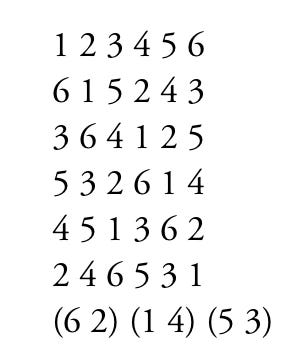
One thing I often do in my writing classes is select a section of text and have students mimic the pattern or structure. I find the confines of an exercise prove liberating for most writers. By looking at a text in a somewhat mathematical fashion (forgive the use of the word math1, we’re all writers here), we can drop into the joy of language.
When I was a college sophomore, my poetry workshop professor, Thomas Rabbitt, had us write a sestina2. I completed the assignment—an unpleasant poem about a plecostomus, inspired by the ugly creature who presided over the aquarium in the living room of the falling-down house I shared with three guys in Northport, Alabama.
But even at eighteen, I knew I was a fiction writer, not a poet, so, for my own amusement, I decided to impose the sestina form on a short story. Instead of ending words I had ending phrases, and I treated a line as a paragraph—thirty-nine paragraphs, divided into seven sections, and so forth. Years later, I attempted to write a novel of thirty-nine chapters, seven sections…you get the picture. (Don’t worry, I won’t put you through that.)
This morning I stumbled across the Substack notes on bewilderment by nick flynn, author of several books of poetry and memoir, including This Is the Night Our House Will Catch Fire. There I found this incantatory paragraph, which beautifully uses a pattern of repeated words (then/much).
The passage begins:
The radio was full of hurricanes then, and the wind speed was always increasing then, and we were always on the verge of sinking then, yet I didn’t think about it all that much.
A brief guided writing exercise inspired by Nick Flynn’s Anaphora.
Write a five-sentence paragraph in which you:
Begin with a sentence comprised of four independent clauses3.
The first three clauses end with the same word (Word A), and the final clause ends with a new word (Word B).
Repeat this pattern for sentence two—using the same ending clause (Clause C).
Write a third sentence of three independent clauses, in which the first two end with Word A, and the third clause ends with a new word.
Write a fourth sentence of four independent clauses, in which the first two clauses end with Word A, and the third and fourth clauses both end with a new word.
Write a fifth sentence of five clauses (combining independent and dependent clauses), in which the first three clauses end with Word A, the fourth clause breaks the story open in an unexpected way, and the fifth clause ends with Clause C.
If you’re feeling ambitious, you could adapt this exercise to a flash fiction or short story.
If you’re thinking, “I haven’t thought about dependent and independent clauses since freshman year of high school,” just remember, an independent clause can “stand on its own” in terms of traditional grammar. It contains a subject and a predicate. A dependent clause doesn’t have all the necessary parts to stand alone.
For a deep dive into grammar, check out the toothy Substack Delusions of Grammar by Sara Levine, author of the forthcoming novel The Hitch, “a delightfully unhinged comedy following a woman as she attempts to exorcise the spirit of a dead corgi from her nephew and renegotiate the borders of her previously rational world.” Levine has an excellent post about rhythm and prose style.
More writing exercises from The Caffeinated Writer
You’ll find more writing exercises, along with the stories that inspired them, in my What to Write This Week series.

Even More Writing Exercises
Matt Bell shares monthly writing exercises over at No Failure, Only Practice.
Alice Hoffman, author of Practical Magic and many other novels, shares 8 writing exercises on her Substack, Writing Magic.

Michelle Richmond is the New York Times bestselling author of six novels and two story collections. She shares fiction at My Fiction Obsession and essays on travel at The Wandering Writer. She is the founder and publisher of Fiction Attic Press.
Once upon a time, I wrote a novel about math (and my publisher called it “women’s fiction” and gave it a pastel cover that looked like an ad for a hair salon).
Any misrepresentation of the grammatical structure of this passage is, of course, unintentional and entirely my own—in my defense I haven’t taught grammar since the turn of the millennium (shout-out to my old freshman comp students at City College of San Francisco).
Just saw your note on Anne Lamott’s “introvert in cruise ship library” post and wanted to connect.
I was a Creative Writing Professor at Montreat college for 15 years and taught Lamott regularly. Great to find a kindred spirit. I also taught sestina and was glad to be reminded today that I always find that writing in form opens up new possibilities in language (iconically). I look forward to engaging in this exercise soon. Just subscribed to you.
Check out my post in Tribute to Anne and see if my words may be of value to you. Happy writing, Kimberly ✍️
https://open.substack.com/pub/wordhappy/p/in-praise-of-shitty-rough-drafts?r=6co7u1&utm_medium=ios
Thank you for this post, Michelle. I used your exercise, inserting a character from a story I am working on, and have a little section that might end up in there, with some small changes. If not, it certainly helped me understand the character a bit more simply by asking my protagonist what type of situation might they be experiencing or recalling where anaphora would contribute to impact. 🙏😊